If you have ever driven from the Presidio toward Ocean Beach and wondered why the Richmond District can feel elegant on one block, rhythmic on the next, and bustling just a few streets over, you are not imagining it. This is one of San Francisco’s largest and most layered neighborhoods, with a housing mix shaped by early cottages, post-1906 growth, and decades of low-rise residential building. If you want to understand how the Richmond looks, lives, and reads from block to block, this guide will help you spot the home styles and streets that define it. Let’s dive in.
Why the Richmond feels so varied
The Richmond District sits between the Presidio and Golden Gate Park and stretches west toward Ocean Beach. Much of the neighborhood was built out by the late 1920s, but its development came in phases, which helps explain why the streetscape changes as you move through it.
A key part of the neighborhood’s identity is its low-rise scale. A planning district strategy reported that nearly 90% of parcels were two stories or less, which gives the Richmond a more modest, grounded feel than taller parts of San Francisco.
That low-rise character does not mean sameness. Instead, you get a mix of single-family homes, flats, small apartment buildings, and a smaller number of condominiums, often arranged in ways that make each corridor feel distinct.
Richmond home styles to know
Single-family homes
Single-family houses shape many of the Richmond’s quieter residential blocks. Near Golden Gate Park, especially around Fulton and the avenues by the park, you can see Mediterranean, Secessionist, Arts and Crafts, and Mission Revival homes mixed with older cottages and more formal enclave residences.
These blocks often have a classic San Francisco layout, with the home set near the front of the lot and the rear used for a garden, shed, garage, or older accessory structure. For buyers, that can translate into a surprisingly useful footprint behind a relatively modest street-facing facade.
Flats and two-unit buildings
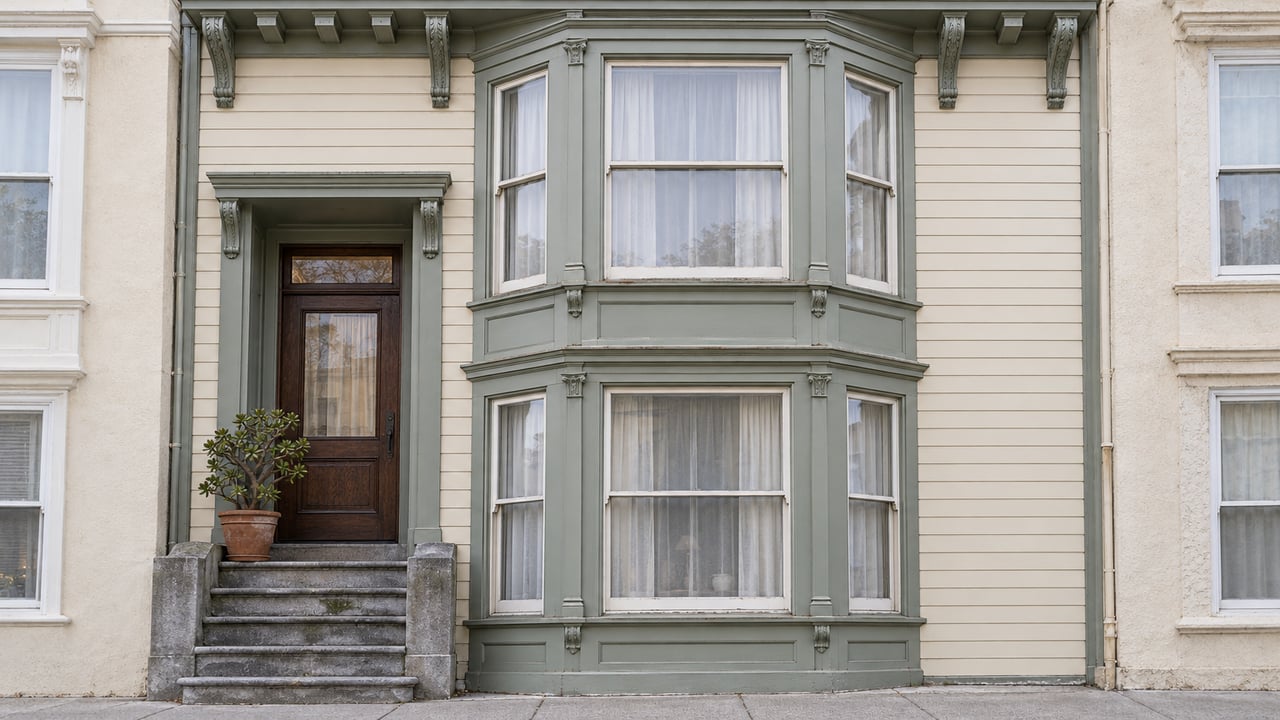
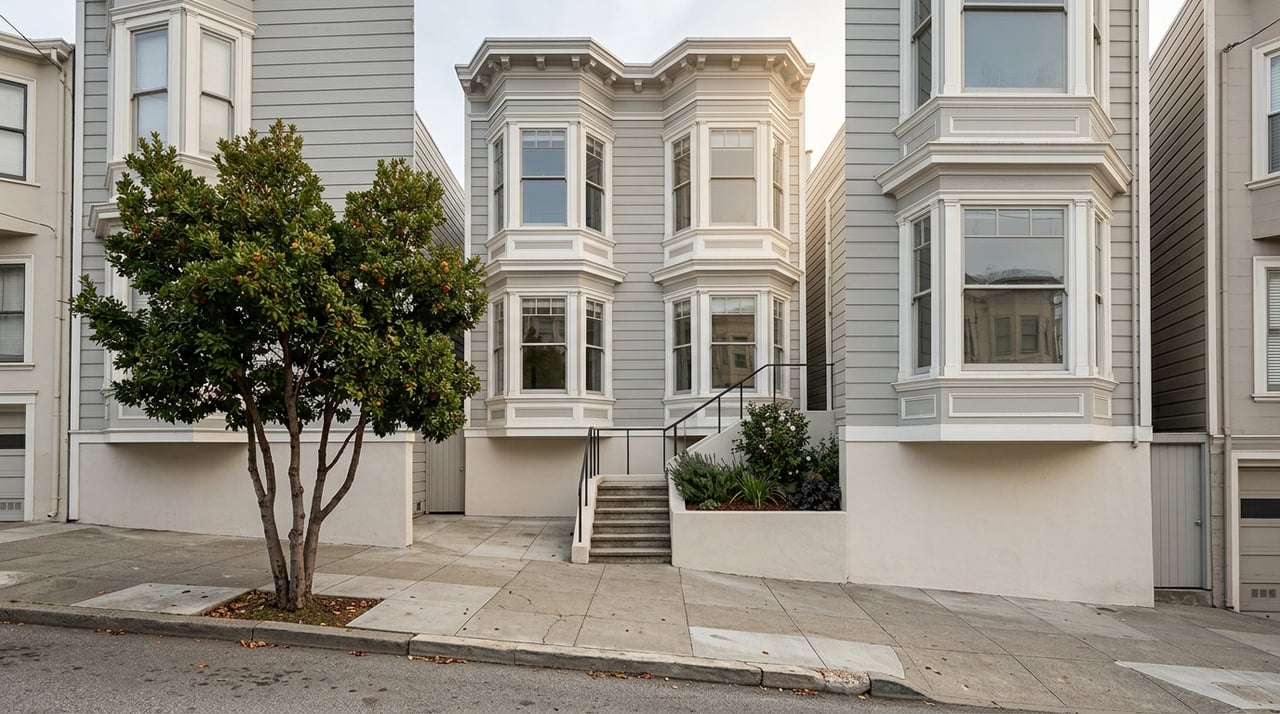
Flats are another major part of the Richmond housing stock. From the sidewalk, many of these buildings read like larger single homes, but a closer look often reveals two entrances and, in many cases, a garage below.
This building type is one reason the Richmond appeals to people who like architectural character but want flexibility in how a property is configured. It also adds to the neighborhood’s visual variety without breaking its low-rise rhythm.
Small apartment buildings
Across the broader west side, low-rise three-story apartment houses became common from the 1920s through the 1940s. You are more likely to notice these on denser corridors or near commercial stretches, where the neighborhood shifts from house-forward to mixed-use in character.
These buildings help explain why some Richmond blocks feel more urban and active, while others feel quieter and more residential just a few avenues away.
Speculative rows and Richmond Specials
Some of the neighborhood’s most memorable blocks come from speculative development. In these stretches, rows of nearly identical dwellings create a repeating pattern that gives the street a steady, rhythmic look.
Later density changes also introduced larger three-family Richmond Specials in some areas, replacing older cottages and bungalows. If you are walking a side street and notice a more uniform run of facades, you are likely seeing this more repetitive side of the Richmond’s development story.
Condominiums and newer infill
Condominiums exist in the Richmond, but they are not the dominant historic form. In many cases, they read more like conversions or newer infill rather than the neighborhood’s defining visual type.
That matters if you are comparing the Richmond with more condo-heavy parts of San Francisco. Here, the streetscape is still led by houses, flats, and small apartment buildings rather than large condo clusters.
Garage-under homes
One of the most useful design cues in the Richmond is the garage-under, living-above arrangement. On many west-side blocks, you will also notice tunnel entrances on later 20th-century homes.
This pattern helps explain why homes can look compact from the street while offering more usable interior space than you might expect. It is a practical detail, but it also shapes the neighborhood’s clean, understated street presence.
Streets that define the Richmond
Clement Street
Clement Street is the historical spine of the neighborhood. The earliest residential core formed along Clement from Arguello to 6th Avenue, and today the street still works as one of the clearest ways to understand the Richmond’s local character.
Inner Clement, between Arguello Boulevard and Funston Avenue, has one of the city’s highest concentrations of restaurants. Outer Clement, between 19th and 27th Avenues, feels smaller in scale and more neighborhood-oriented.
If you are trying to read the area quickly, Clement is a good shorthand for neighborhood life. It is active, practical, and deeply tied to the Richmond’s identity.
Geary Boulevard
Geary Boulevard is the district’s clearest east-west corridor for transit and car traffic. It became the principal automobile route through the Richmond and attracted redevelopment in the 1910s and 1920s.
Today, it still reads as broad and energetic, framed largely by one- and two-story buildings. If Clement feels intimate and neighborhood-focused, Geary feels bigger, faster, and more commercial in scale.
Balboa Street
Balboa Street offers a different texture from Geary. It tends to feel smaller, more local, and more pedestrian-friendly, especially on outer Balboa.
Planning identified inner Balboa between 2nd and 8th Avenues and outer Balboa between 32nd and 39th Avenues. For many buyers, Balboa can feel like a useful middle ground between the activity of major corridors and the calm of fully residential side streets.
California Street
California Street played an important role in the neighborhood’s earlier development. Before the post-1906 building boom, residential growth clustered along California, Geary, Fulton, and the cross streets connecting them.
Transportation along California helped push more upscale development into the northeastern Richmond. If you are looking at the eastern side of the district, this history helps explain why some blocks feel more established and formal.
Fulton Street and the park edge
Fulton Street and the blocks near Golden Gate Park show the Richmond in a more residential, house-forward way. Lots facing the park and the intersecting avenues were desirable for single-family dwellings in the 1910s and 1920s.
As a result, these streets often feel calmer and more composed than the main commercial spines. If your ideal block is quieter and more architectural, the park edge is one of the first places to study.
Arguello, Lake, and Presidio Terrace
Arguello Boulevard, nearby Lake Street, and Presidio Terrace define the Richmond’s most garden-like early enclaves. Presidio Terrace, developed beginning in 1905, includes Tudor Revival, Mission Revival, Craftsman, and Classical Revival houses in a planned residential park setting.
The nearby Presidio edge and Lake Street also developed with a landscaped, more suburban pattern. These are some of the blocks where the Richmond feels most refined and distinctly separate from its busier commercial corridors.
Side streets like 5th Avenue
Not every important Richmond street is a major corridor. Side streets such as 5th Avenue reveal the neighborhood’s repetitive speculative side, where rows of similar dwellings and mid-block flats create a more even streetscape.
These blocks help balance the Richmond’s more formal pockets. They show the everyday residential fabric that gives the district much of its consistency and livability.
How to read a Richmond block
If you are home shopping, selling, or simply comparing micro-locations, it helps to know what the surrounding streets usually signal. In the Richmond, the block often tells you as much as the property itself.
If a home faces Clement or Geary, it is more likely to sit near mixed-use activity, denser building types, or commercial structures. If it is closer to Golden Gate Park or the Arguello and Lake area, it is more likely to present as a quieter residential street with more single-family or garden-suburb character.
A simple shorthand can help:
- Clement for neighborhood life
- Geary for scale and motion
- Balboa for smaller commercial texture
- Fulton and park-edge blocks for calmer residential character
- Arguello, Lake, and Presidio Terrace for the district’s more formal and landscaped feel
Richmond versus the Sunset
People often compare the Richmond with the Sunset, but the two do not read the same way on the ground. The Richmond is generally older and more varied, with 19th-century cottages, pre- and post-1906 infill, flats, apartments, and early enclave development all contributing to its look.
By contrast, the Sunset is more uniform and tract-like in its visual rhythm, with rows of similarly massed single-family houses built mainly from 1925 to 1950. If the Sunset often feels consistent block to block, the Richmond tends to feel more contrast-driven.
That contrast is part of its appeal. You can move from a busy commercial spine to a formal park-edge block to a quieter repetitive side street in a relatively short distance, and each setting offers a different version of neighborhood life.
Why this matters for buyers and sellers
If you are buying in the Richmond, understanding home styles and street patterns can help you narrow your search faster. A condo conversion near a commercial corridor, a flat on a rhythmic side street, and a single-family home near the park may all fall under the same neighborhood name, but they can offer very different day-to-day experiences.
If you are selling, these distinctions matter just as much. The Richmond is not a one-note neighborhood, so strong marketing starts with identifying exactly what your block communicates, then presenting the home in a way that matches that setting and the buyer likely to respond to it.
That is especially true in a design-conscious city like San Francisco, where buyers often react to both layout and context. A home’s facade, its relation to the street, and the feel of the surrounding block all shape first impressions long before someone studies the floor plan.
If you want help understanding how a specific Richmond property fits into the broader San Francisco market, Sasha Mazur offers thoughtful, design-aware guidance for buyers and sellers who want a more informed approach.
FAQs
What types of homes are most common in the Richmond District?
- The Richmond is defined mainly by single-family homes, flats, two-unit buildings, and small low-rise apartment buildings, with condominiums present but less dominant in the streetscape.
What does Clement Street feel like in the Richmond District?
- Clement Street is the neighborhood’s historic spine and is often the best shorthand for local daily life, with Inner Clement feeling more restaurant-focused and Outer Clement feeling smaller in scale.
How is Geary Boulevard different from Balboa Street in the Richmond District?
- Geary feels broader, more auto-oriented, and more commercial, while Balboa generally feels smaller, more local, and more pedestrian-friendly.
Which Richmond District streets feel most residential?
- Fulton Street near Golden Gate Park, plus areas around Arguello Boulevard, Lake Street, and Presidio Terrace, tend to feel more house-forward, calm, and formally residential.
How does the Richmond District compare with the Sunset?
- The Richmond generally feels older and more varied, while the Sunset is more uniform in its building rhythm and overall streetscape.
What visual detail should you notice on Richmond District homes?
- A common cue is the garage-under, living-above layout, often paired with tunnel entrances on later 20th-century homes, which can make a home appear modest from the sidewalk while offering substantial space inside.